
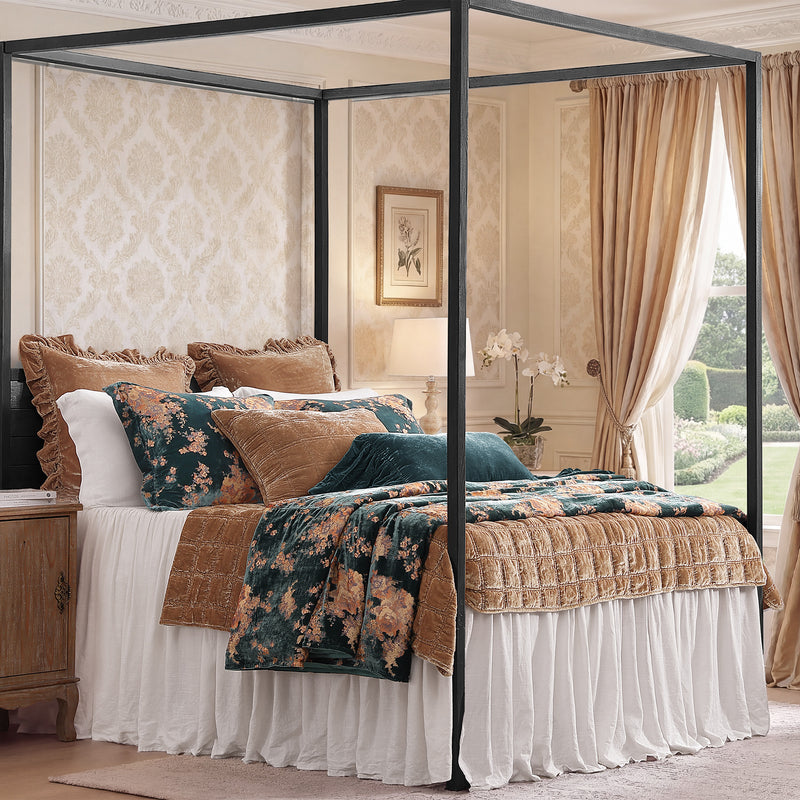

Our 100% Linen vs. Signature Washed Linen Blend
Pure European flax versus our viscose-linen blend — what each one is, how each one feels, and a small but useful skill for reading a linen label.

100% European Flax Linen
Pure flax
- 100% Flax
- Substantial hand
- Wrinkles freely
- Premium
Best for the buyer who wants the most authentic linen experience and loves a relaxed, lived-in bed.

Washed Linen Blend
70% viscose · 30% linen
- Viscose-linen blend
- Soft, drapey
- Resists wrinkles
- More accessible
Best for easier care, daily-use bedding, and any of our printed linen designs.
Linen is a fabric with range. The same fiber, woven a few different ways and finished a few different ways, can show up as a crisp, structural sheet or as the soft, lived-in duvet you've already half-pulled across the bed. Most of the confusion shoppers run into around linen isn't about quality. It's about labels — what "linen" actually means on the tag, and how it changes when another fiber is added to the mix.
At HiEnd Accents we make two distinct linen fabrications, and they are not interchangeable. 100% European Flax Linen is the pure, premium version — flax fiber grown in Western Europe and woven into a fabric that gets better the longer you live with it. Our Washed Linen Blend is a specific viscose-linen blend (70% viscose, 30% linen) — softer and more forgiving, with a textured surface that's a particularly good canvas for printed designs. Below: how each one is made, how it feels, and which one belongs on your bed.
What we mean when we say "linen"
Linen is the fabric made from the long, fine fibers of the flax plant. It's one of the oldest textiles in continuous use — Egyptian tomb linens still survive — and it has a set of properties no other natural fiber quite matches: it's exceptionally strong, naturally breathable, slightly absorbent, and gets softer the more it's washed without losing its character.
Where flax is grown matters. The narrow band running through northern France, Belgium, and the Netherlands is widely considered the best growing region in the world — the long, cool, slightly damp summers produce stalks with the longest, finest fibers. This is the flax used in the linen we label "100% European Flax."
A linen blend mixes flax with another fiber to change one or more of those properties. The blend we use most often pairs linen with viscose at roughly 70% viscose, 30% linen. The combination keeps the textured, slightly slubby look of linen while softening the hand and reducing the wrinkling.
One fiber. Two finishes.

Fabric No. 01
100% European Flax Linen

Fabric No. 02
Washed Linen Blend
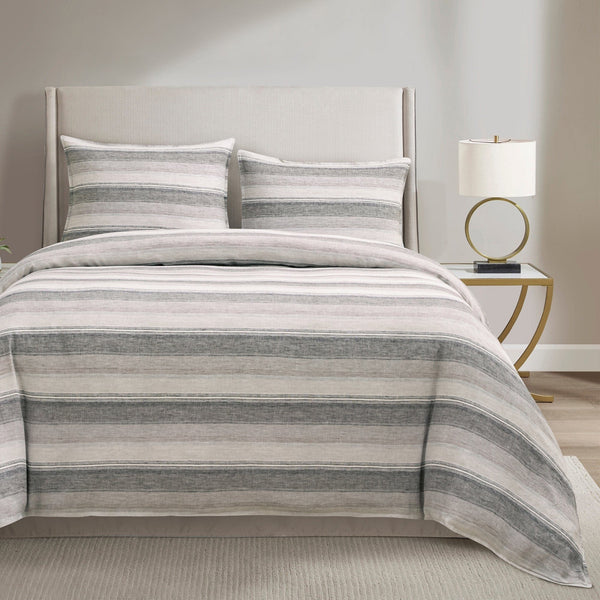
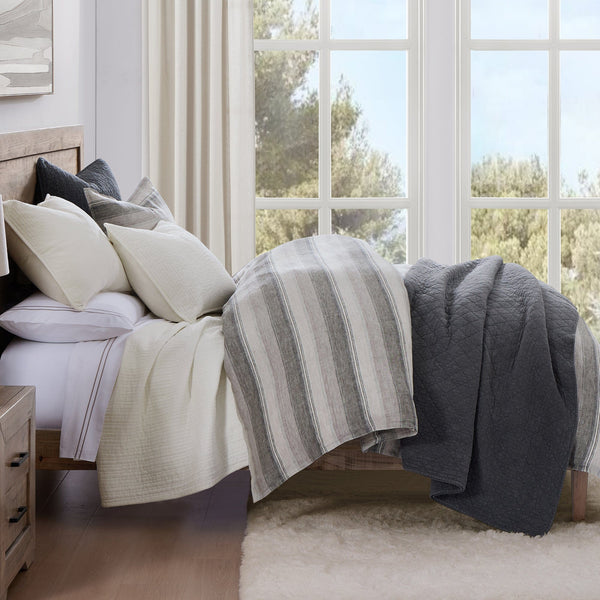
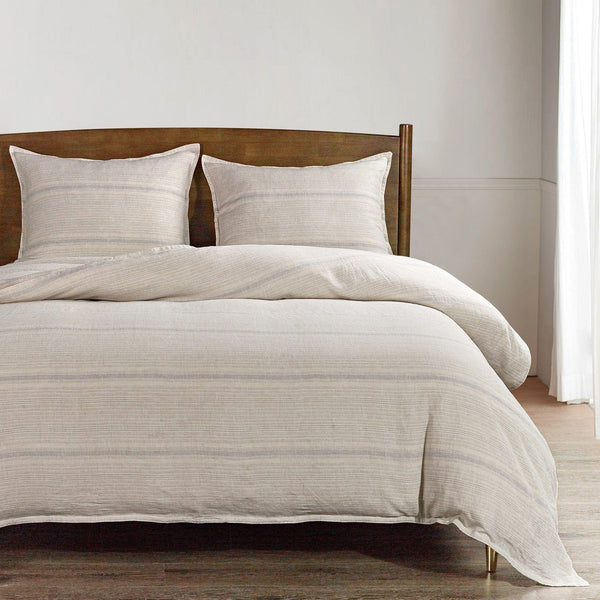
The Pure One
Pure flax
Long-fiber European flax, woven and finished without any other fiber added. The most authentic, most luxurious version of linen we make.
- Fiber
- 100% flax, grown in Western Europe
- Hand
- Substantial weight, softens with every wash
- Character
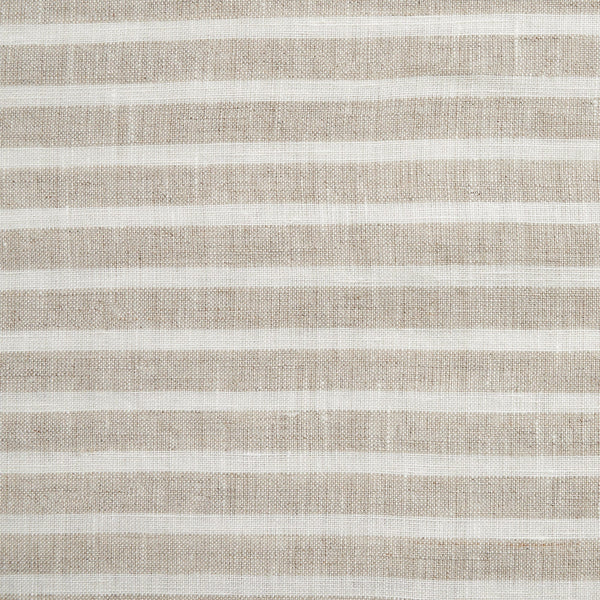
- Visible slubs; the relaxed, lived-in wrinkle is part of the aesthetic
Why European flax
European flax is widely regarded as the gold standard. The Western European climate — temperate summers, frequent rain — produces flax stalks with the longest, finest individual fibers, which translates into a smoother yarn and a softer, stronger fabric. The vast majority of premium linen sold worldwide starts with flax from this region.
How it feels in bed
New 100% linen has weight and substance — it's not the slick glide of cotton sateen. It breathes exceptionally well (cool in summer, surprisingly warm in winter, because the fiber is hollow and traps body heat without trapping moisture). And every wash makes it softer. The first night it'll feel a little structured. After ten washes it feels like it has always been on your bed.

A note on wrinkles
Pure linen wrinkles. That's the fiber doing what flax fiber does — it's not a flaw, it's part of the look. The relaxed, slightly rumpled bed is the entire aesthetic. If you've seen a hotel-bed-perfect, taut-as-a-drum finish on linen, someone is ironing it daily, or it isn't actually 100% linen. Most of our customers love the lived-in look. If you don't, our blend below is the better fit for you.
What we make in it
Solid duvet covers and a variegated stripe — clean canvases that let the fiber itself do the work. Pure linen is rarely printed because the fabric's natural texture and the wash that softens it both compete with applied pattern. When we want a print, we use the blend below for a reason.


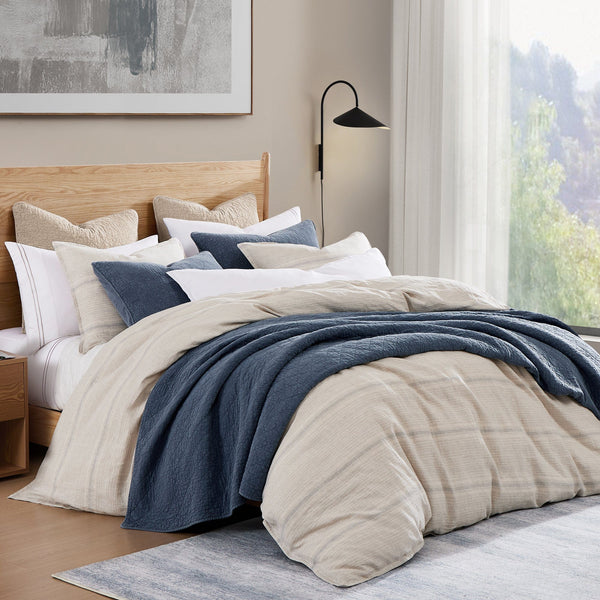


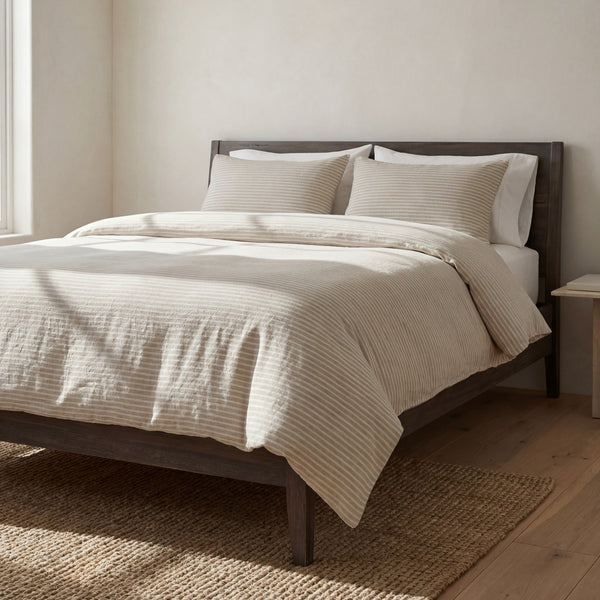
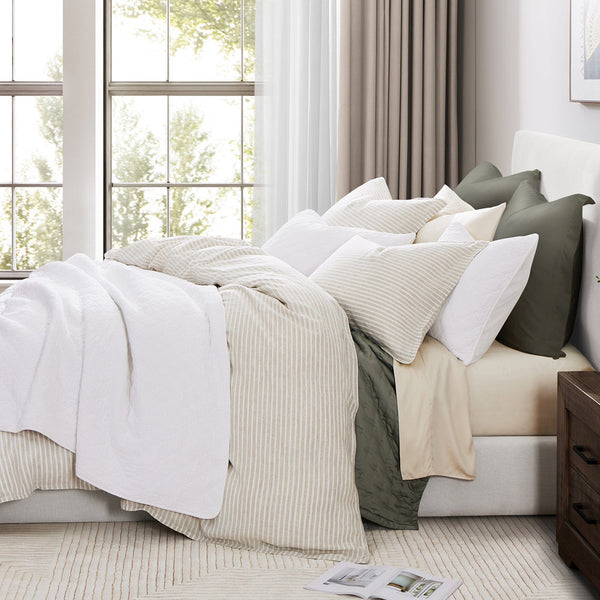

The Versatile One
70% viscose · 30% linen
A linen and viscose blend, garment-washed to a soft, easy-care hand. The same base appears across our solids and our prints — and it's where most of our printed linen designs live.
- Fiber
- 70% viscose, 30% linen
- Hand
- Softer and lighter from day one; keeps a subtle linen texture
- Care
- Standard machine wash; resists wrinkles, settles fast
How the two fibers work together
Our Washed Linen Blend is 70% viscose, 30% linen — and the ratio is intentional. Viscose is a plant-based fiber (spun from wood pulp, not a synthetic); on its own it's smooth, drapey, and soft against the skin. Linen brings the slubby, textured surface and the natural breathability that make the fabric recognizable as linen. Together they give you the look and texture of linen with a softer hand, a more fluid drape, and dramatically less wrinkling than the pure version.
Why it's lighter on care
Pure linen rewards careful washing — gentle cycles, low heat, often line-drying. Our Washed Linen Blend is more forgiving. A standard cold wash and a tumble dry on low is the whole routine. For households where bedding gets washed weekly and tossed in with everything else, the blend is the practical choice.
Why our prints sing on this base
This is the part of the story that's hardest to communicate without seeing it in person. Most printed sheets and bedding are printed onto smooth, featureless fabric — the design ends up looking applied, sitting on top of the cloth. Our Washed Linen Blend has a textured surface from the linen content: subtle slubs, natural grain, a slight unevenness. When we print on it, the pattern picks up all of that texture. The result reads woven-in rather than printed-on — the print has dimension and depth that a flat base can't produce.

It's the same base, every time
One thing worth knowing: every set on our Washed Linen Blend uses the same underlying fabrication. Whether you're looking at a solid Hera, Luna, or Lily, or a print like Dalia, Provence, Rosaline, Carmen, or Genoa, the base cloth is identical. What changes is the finish, the colorway, and whether a pattern is applied. That consistency is part of why these collections layer well together.
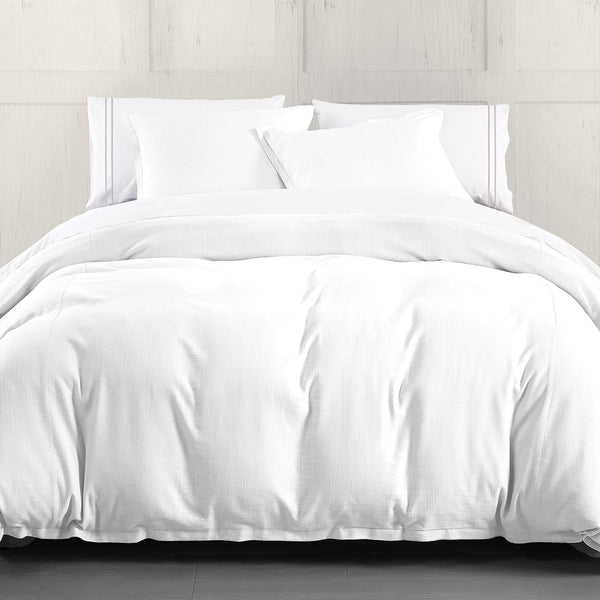
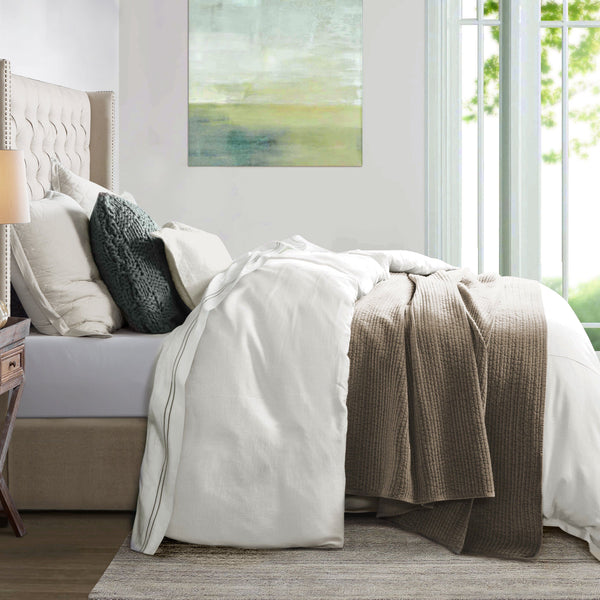
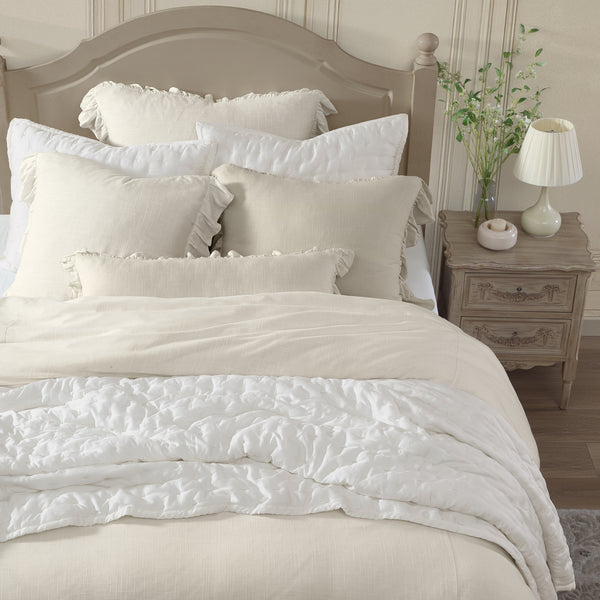
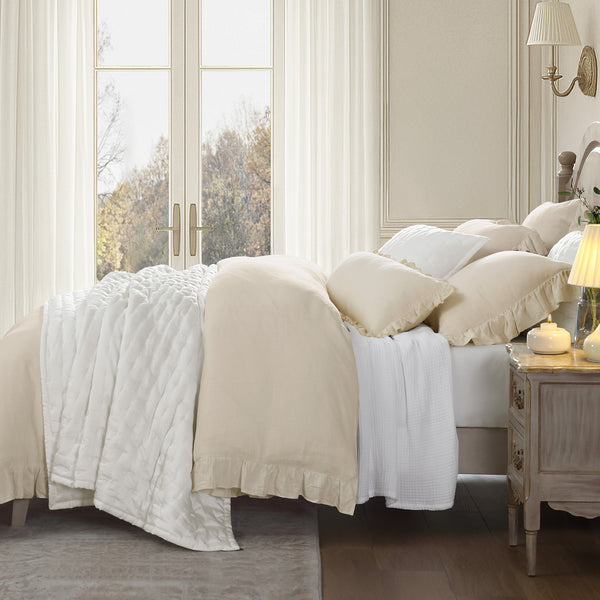
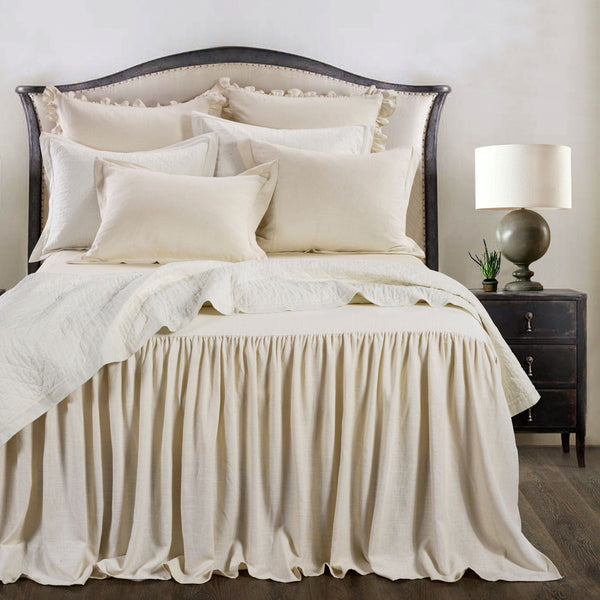


The two, at a glance
| 100% European Flax LinenPure flax | Washed Linen Blend70% viscose · 30% linen | |
|---|---|---|
| Fiber | 100% flax, grown in Western Europe | 70% viscose, 30% linen |
| Hand-feel | Substantial, with the natural slubs of pure linen — softer with every wash | Softer and lighter from day one; keeps a subtle linen texture |
| Drape | Holds shape; falls in defined folds | Drapes more fluidly; settles quickly |
| Wrinkling | Wrinkles freely — part of the lived-in look | Resists wrinkles; stays presentable longer |
| Care | Gentle wash, low heat or line dry | Standard machine wash, tumble dry low |
| Best as | Solids or yarn-dyed stripes — the fiber leads | Solids and prints both — texture adds depth to applied designs |
| Price tier | Premium | More accessible |
| Best for | The buyer who wants pure linen, accepts the wrinkles, and intends to live with the fabric for years | The buyer who wants the linen aesthetic but prefers easier care — and anyone shopping our prints |
How to read a linen label
"Linen" is a word that gets used loosely. A few minutes of label-reading is the single best way to know what you're actually buying — and what you're paying for. Here's the short version.
Pure flax fiber, no other fiber added. The most premium version, with the most natural character — including visible wrinkling. Always the most expensive linen in any line.
A blend of linen and viscose — a plant-based fiber spun from wood pulp, not a synthetic. Typically viscose-dominant for the softer hand, with linen for the texture. Our Washed Linen Blend is 70% viscose, 30% linen — less wrinkling, easier care, and still the recognizable linen look.
A different blend entirely — cotton mixed with flax. Crisper than a linen/viscose blend, more durable, often used in coverlets and quilts. Worth knowing it's not the same fabric as our Washed Linen Blend.
This is the synthetic — polyester (or similar) textured to resemble linen. Cheaper, less breathable, doesn't soften with washing. Not the same category as our viscose blend. We don't carry these, but you'll see them in mass-market bedding. Always read the fiber percentages.
How to wash linen, both kinds
100% European Flax Linen: cool or warm wash on a gentle cycle, tumble dry on low, or line dry for the lightest hand. Skip the fabric softener — it coats the fibers and reduces breathability. The fabric is meant to soften through washing, not through chemical finish. Iron only if you genuinely want to — most people don't, after the first couple of weeks.
Washed Linen Blend: standard cold wash, tumble dry on low. No special handling. The blend is engineered to behave well in a normal household laundry routine, which is most of why we make it. A dryer ball is better than a softener sheet if you want even fluffier results.
For both fabrics: rotate two sets if you can — a duvet that gets washed every other week instead of every week roughly doubles its working life.
The short version
- 100% European Flax Linen is the pure version — premium fiber, natural wrinkling, gets softer for years. Solid duvets and yarn-dyed stripes only.
-
Washed Linen Blend is a viscose-linen blend (70% viscose, 30% linen). Same texture, softer hand, less wrinkling, easier care.
- It's also where every one of our printed linen designs lives — the textured base gives prints a dimension a smooth fabric can't.
- One blend, one base. Hera, Luna, Lily (solids) and Dalia, Provence, Rosaline, Carmen, Genoa (prints) all share the same underlying fabric.
- Our cotton-linen pieces (the Linen Cotton Diamond Quilt, for example) are a different fabrication — not the Washed Linen Blend. Read the label.
- Neither is "better." Pick the pure if you want the most authentic linen experience; pick the blend if you want easier care or you love a print.